Reviewing Wishing Happy Merry Christmas for Holiday Embroidery
As we approach the peak season for custom orders, every stitch counts. I recently pulled the Wishing Happy Merry Christmas design from my library to evaluate its potential for real-world application. In the world of machine embroidery design, a pretty preview image is never enough; we need to know how a file behaves under the needle, how it sits on textured fabrics, and whether it holds up to the scrutiny of a paying customer. This review breaks down the practical viability of this specific asset for your upcoming holiday embroidery projects.
First Impressions and Visual Personality
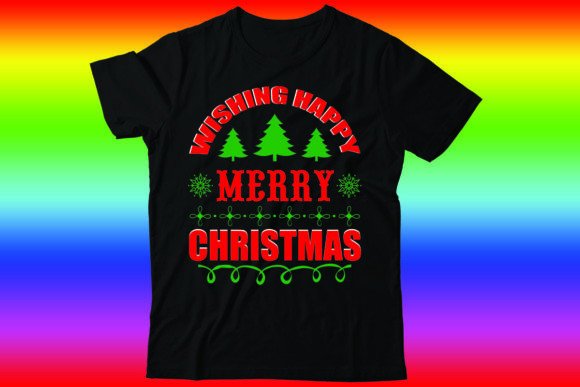
Upon loading the Wishing Happy Merry Christmas file into my editing software, the first thing that stands out is the balance between festive cheer and readability. The layout suggests a classic holiday sentiment, likely utilizing a mix of script and block lettering to create visual interest. For a designer, the immediate question is always about flow: do the letters connect smoothly, or are there awkward jumps that will require excessive trimming?
The mood created here is warm and inviting, perfect for the emotional connection people seek during the holidays. However, the visual personality of this design leans towards traditional celebration. It feels at home on cozy items rather than high-fashion streetwear. When considering this for T-Shirt Designs, one must assess if the typography is bold enough to stand out on a casual tee or if it works better as a subtle accent on home goods. The spacing appears generous, which is a good sign for avoiding puckering, but the specific interplay of curves and straight lines needs a close look before committing to a final product.
Real-World Application: The Sweatshirt Test
To truly gauge the value of this embroidery file, I envisioned a specific scenario: a custom order for a family set of matching holiday sweatshirts. This is a bread-and-butter job for many Etsy sellers and craft business owners in December. The Wishing Happy Merry Christmas design would sit prominently on the chest or perhaps across the upper back.
In this context, the design's performance relies heavily on how the stitches interact with fleece or heavy cotton blends. If the design utilizes a high stitch density with extensive fill stitch areas, it could become stiff and uncomfortable against the skin. A successful finished product in this category needs to remain soft. If the lettering uses satin stitch columns, they need to be wide enough to cover the fabric texture without sinking in, yet narrow enough to prevent thread bunching. For a personalized gift like this, the customer expects durability; the design must withstand repeated washing without the edges fraying or the fabric distorting around the text.
Versatility Across Product Lines
Beyond apparel, where else does Wishing Happy Merry Christmas shine? The versatility of a text-based design is often its strongest asset.
- Tote Bags: On a canvas tote, the design can be scaled up significantly. The sturdy fabric supports denser stitching, making this an excellent choice for a tote bag design that carries groceries or gifts.
- Kitchen Linens: Imagine this stitched onto a flour sack towel or an apron. The rustic charm of the message pairs well with natural fibers, provided the stabilizer choice prevents the lightweight fabric from gathering.
- Patches: Creating an embroidered patch is another viable route. If the design has clean outer edges, it can be digitized or used as-is for a merrow-edge patch, adding a collectible element to your small shop product lineup.
- Nursery Decor: For a softer touch, scaling this down for a baby blanket or onesie creates a sweet baby embroidery item. Here, the detail level becomes critical; tiny serifs or intricate loops might get lost or cause irritation on infant skin.
Technical Considerations and Fabric Challenges
While the aesthetic appeal is strong, a professional reviewer must address the technical hurdles. Not every fabric is a suitable canvas for Wishing Happy Merry Christmas.
If you are working with stretchy knits, such as those used in custom apparel, you must be wary of the design's width. Wide designs can restrict the natural stretch of the garment, leading to popped stitches when the wearer moves. Similarly, textured fabrics like waffle weave or heavy terrycloth can obscure fine details. If the design relies on running stitch outlines for definition, these might disappear into the pile of a towel.
Dark fabrics present another challenge. If the design includes small, enclosed areas or tight letter spacing, ensuring full coverage with contrasting thread colors is essential to avoid the base fabric showing through. This is particularly important for maintaining brand consistency and professionalism in your commercial embroidery work. A design that looks crisp on white may look muddy on navy if the underlay isn't sufficient.
Designer Notes for Optimal Results
Before running a production batch, I recommend a strict testing protocol. Always stitch the Wishing Happy Merry Christmas design on a scrap piece of your actual production fabric first. This "test run" reveals issues that a screen preview cannot. Check the following:
- Stabilizer Selection: Match the stabilizer to the fabric weight. Heavy cut-away stabilizers are often needed for stretchy garments to prevent distortion, while tear-away might suffice for stable wovens.
- Hoop Size Verification: Confirm that the design fits within your available hoop size. If the design is large, you may need to re-hoop or adjust the placement, which can affect alignment on symmetrical items like caps.
- Thread Contrast: Test the design in both light-on-dark and dark-on-light scenarios. Sometimes a design needs slight tweaking in tension or density when switching thread types (e.g., rayon vs. polyester).
- Detail Inspection: Zoom in on the stitched sample. Are the corners sharp? Do the curves look smooth, or are they faceted? Tiny imperfections here can lower the perceived value of your handmade product.
- Licensing Check: Finally, always verify the license terms associated with the digital embroidery file. Ensure you have the rights to use it for commercial embroidery and selling finished items, especially if you plan to list these as design assets or include them in bundled offerings.
Final Verdict on Market Viability
The Wishing Happy Merry Christmas design holds significant promise for the holiday market, provided it is executed with attention to material and technique. Its strength lies in its universal message, which appeals to a broad demographic looking for personalized gifts and festive decor. For the creative entrepreneur, this file represents an opportunity to create high-margin items like boutique pillows or custom family apparel.
However, success depends on the maker's ability to adapt the design to the substrate. It is not a "one-size-fits-all" solution. By respecting the limitations of fabric texture, stretch, and hoop capacity, you can transform this digital file into a tangible asset that boosts customer trust and engagement. Whether used for a single printable mockup to test market interest or a full run of holiday merchandise, this design rewards careful preparation with a polished, professional result.